
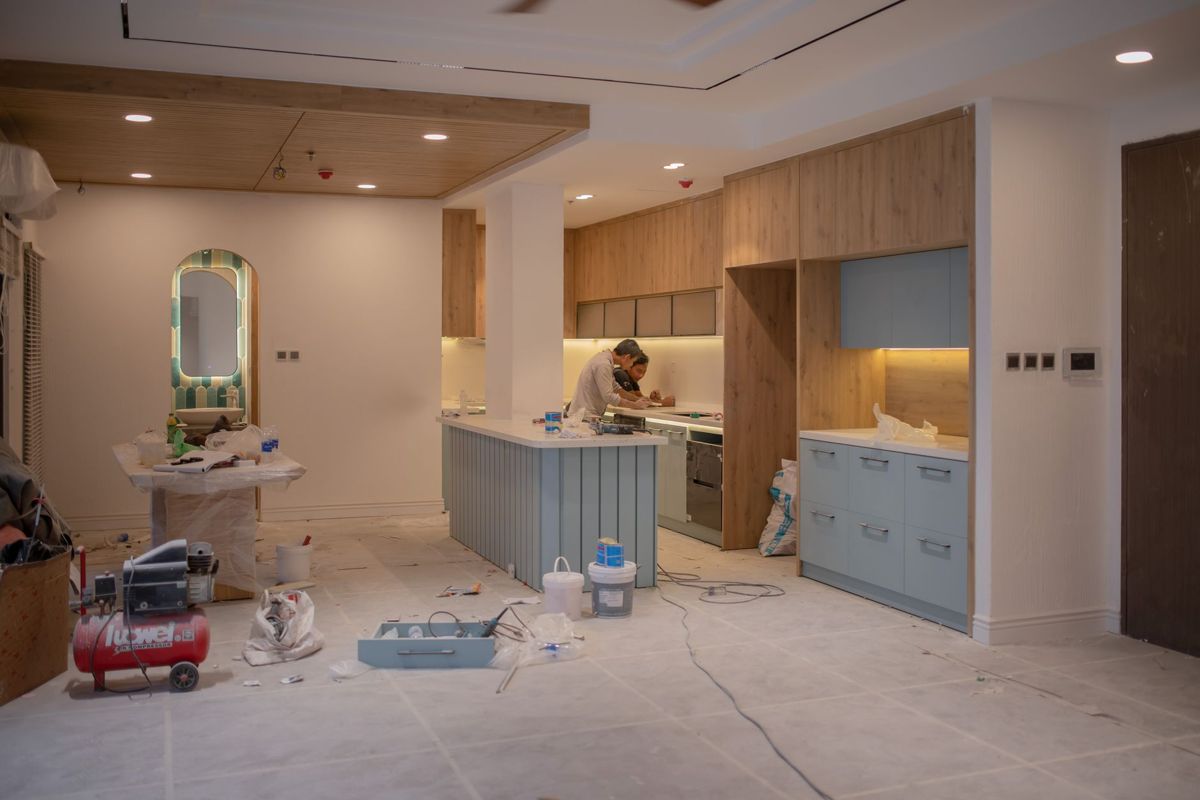
Painting kitchen cabinets in LaPlace comes down to prep, and in a River Parishes kitchen that means fighting two things at once: years of cooking grease and the thick, humid air that settles over St. John the Baptist Parish for much of the year. Humidity slows drying, and grease stops paint from sticking, so a cabinet job that skips steps can start chipping around the handles within months.
We’ll walk through how we prep cabinets for a smooth, durable finish, step by step. Whether you’re tackling it yourself or hiring it out, knowing the process helps you judge the result.
How do you prep kitchen cabinets for painting?
The full sequence looks like this: empty and protect the kitchen, remove and label doors and hardware, degrease, repair, sand, clean off the dust, and prime. Paint is the last and quickest part. On most kitchens, prep takes longer than the finish coats.
Start by emptying the cabinets and covering countertops, floors, appliances, and the sink. Mask the walls where cabinet boxes meet them, and turn off or cover the range hood. If you’re keeping the cabinet boxes in place, plan on the kitchen being out of normal use for a while.
How do you remove and label cabinet doors and hardware?
Take every door and drawer front off before you paint. Painting doors on their hinges leaves drips at the edges and paint in the hinge cups. Here’s the labeling method we use:
- Number each door and its matching opening with painter’s tape, or write the number in the hinge hole where it won’t show later.
- Bag the hinges and screws for each door separately and write the number on the bag.
- Remove knobs and pulls and set them aside in a labeled container.
- Photograph the kitchen before you start, so you know exactly where everything goes back.
If you plan to switch to hardware with a different hole spacing, decide now. Old holes get filled during repair, and new ones are drilled after the paint cures.
How do you clean cabinets before painting?
This is the step that decides whether paint sticks. Cabinets near the stove collect a film of grease that you often can’t see, and paint won’t bond to it. Scrub every surface with a degreasing cleaner made for pre-paint prep, paying extra attention to the areas around handles and the upper cabinets over the range.
Rinse with clean water and a fresh cloth so no cleaner residue is left behind, then let everything dry fully. In a humid LaPlace summer, “fully” can take longer than you’d think, especially on inside faces and edges. Running the AC or a dehumidifier in the kitchen during prep helps.
Do you need to sand cabinets before painting?
Yes. You don’t need to strip them to bare wood, but you do need to dull the existing finish so primer can grip. A scuff sand with a medium-fine grit is usually enough on factory-finished cabinets, while rough or previously painted ones may need more work to level old drips and brush marks. Sand with the grain on solid wood doors.
Before sanding, fill dents and old hardware holes with a wood filler and sand those spots flush once dry. On oak cabinets, decide whether you want the open grain to show through the paint. If you’d rather have a smooth, furniture-like look, a grain filler goes on at this stage.
One caution for older kitchens: if your home was built before 1978, older cabinet coats could contain lead. Under the EPA’s Renovation, Repair and Painting Rule, firms paid to sand or scrape more than a small area of painted surface in a pre-1978 home must be certified and follow lead-safe work practices, unless testing shows no lead. If you’re doing it yourself, test first and follow EPA’s lead-safe guidance.
What primer should you use on kitchen cabinets?
Use a bonding primer made for slick surfaces or cabinet work, and check that it’s compatible with your topcoat. The primer is what holds everything together, especially on glossy factory finishes. Thermofoil or laminate cabinets are a special case. They don’t take paint the way wood does, so ask about compatibility before you commit to painting them.
After priming, lightly sand with a fine grit to knock down any raised grain, then remove all dust with a vacuum and a tack cloth. Dust left behind shows up as bumps in the finish.
How do you get a smooth finish on painted cabinets?
A smooth finish is mostly about dust control and thin coats. Work in the cleanest space you can, and apply thin, even coats with a fine-finish roller and brush or a sprayer. Lightly sand with a very fine grit between coats. Most cabinet enamels need more than one finish coat to reach full coverage and a consistent sheen.
Humidity matters here too. Paint dries more slowly in damp air, and recoating before the previous coat is ready can leave soft spots or a wrinkled surface. Check your product’s label for recoat time at your conditions, and give the kitchen extra time during the muggy months. In South Louisiana, fall and spring usually give the most predictable drying.
How long should you wait before hanging cabinet doors back up?
Doors can often be handled once they’re dry to the touch, but paint takes much longer to cure hard enough to resist chips and sticking. Follow the manufacturer’s cure time for your specific product. Rehang doors carefully, use your numbered bags to match hinges, and adjust the hinges so doors close evenly. Go easy on cleaning and heavy use for the first stretch while the finish finishes curing.
What LaPlace homeowners should plan for
Kitchens in LaPlace and nearby River Parishes towns often have wood or MDF cabinets, and both paint well with the right prep. The local challenges are steady humidity and heavy cooking, from gumbo to fried seafood, both of which make cleaning and drying time matter more than they would in a drier climate. Build a few extra days into your schedule for drying, especially from June to September.
If you’re trying to choose a new cabinet color, our color consultation service can help you pick a shade that works with your counters and floors. You can also browse finished kitchens in our project gallery or check our painting FAQs.
Want us to handle the prep?
Cabinet painting is labor-heavy, and the prep decides how long the finish lasts. Our crews remove, label, degrease, sand, prime, and finish cabinets throughout the River Parishes. Learn more on our cabinet painting services page, the page for cabinet painting in LaPlace, or our LaPlace service area overview. We also serve neighbors in St. Rose, and if the rest of the room needs a refresh, see interior painting in LaPlace.
Ready for cabinets that look new again? Call Big Easy Paintings at (504) 226-6252 or request a free estimate through our contact page.
Either way
Small room or whole elevation
Whether you have a small interior project or a large-scale exterior makeover in mind, Big Easy Paintings is your partner for the work. Talk to us about the project, get a quote, and we will tell you plainly what it takes.
Free estimate
Tell us where you are and what needs painting
On site or remote, in all twelve towns. No charge and no obligation. If it is quicker to talk, call 504-226-6252 and we will pick up.
- A written quote for two coats, itemized
- The prep spelled out, not assumed
- A start date we can hold
- The same crew from first day to last
Request a free estimate
Or call 504-226-6252
Two coats, quoted up front
No range, no surprise second visit to finish what one coat could not.